

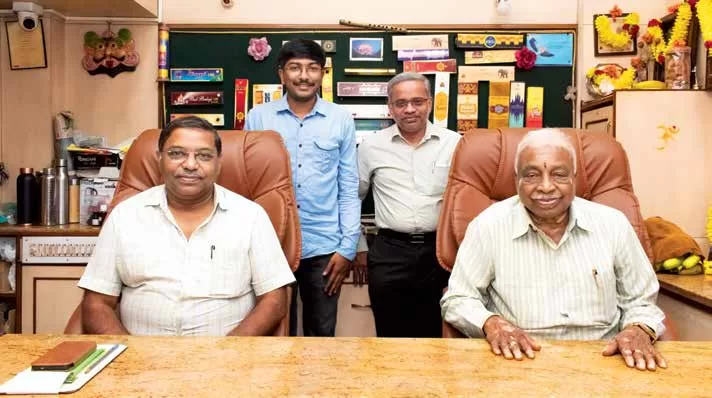
61 Years of Masala Agarbatti: The Legacy of Sree Trading Company
Our Masala Agarbattis are crafted with the Finest Natural Spices : Sanjay
With a legacy spanning over six decades, Sree Trading Company from Bengaluru stands as a pioneer in the traditional art of masala agarbatti making. Founded in 1964 by Mr. Lakshmi Narayan Setty and Mrs. Prabhavati, the company has remained steadfast in its commitment to crafting high-quality, handmade incense sticks using authentic spices, herbs, and natural ingredients. From humble beginnings in trading to becoming a recognized name in both domestic and international markets, Sree Trading has not only preserved the rich heritage of masala agarbattis but also embraced innovation through its bamboo-less and fragrant powder offerings. In an exclusive conversation with Sugandh India, Mr. Sanjay and the third-generation entrepreneur Mr. Suhas share the company’s inspiring journey, market insights, and their vision for the future of the incense industry.
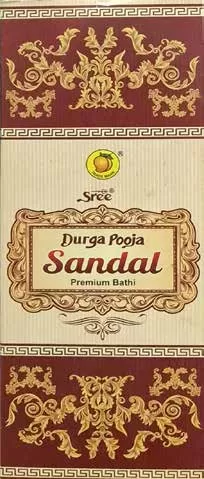
Mr. Sanjay, shared with Sugandh India that his father Mr. Lakshmi Narayan Setty and mother Mrs. Prabhavati began working in the agarbatti industry in 1963. In 1964, they officially started their business under the name “Sree Trading.” Initially, they began with trading and soon ventured into manufacturing masala agarbattis. Over time, the company also began producing flora and scented agarbattis.
Sree Trading Company currently offers around 200 product variants, which are popular not only in Karnataka but also in Andhra Pradesh, Tamil Nadu, West Bengal, Odisha, Jharkhand, and Bihar. In the domestic market, both masala and scented agarbattis are in demand. The company also exports on a large scale — starting with Sri Lanka, South Africa, Mauritius, and Malaysia, and now expanding to Australia. Mr. Sanjay revealed that his parents had 60 years of expertise in masala agarbatti-making. His brother Mr. Harishjoined the business in 1985. Addressing the challenge of sourcing food-grade spices, he explained that they procure most spices during their harvesting seasons and also source from Assam, Sri Lanka, and Madhya Pradesh.
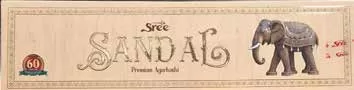
He mentioned that while masala agarbattis had lost popularity for a time, the trend is now making a comeback. However, many who now attempt to make them fail to maintain quality. As a result, many simply dip ordinary sticks and sprinkle powder on them to pass them off as masala agarbattis, which affects overall quality.
When asked whether expensive spices make their products costly, he replied that although spices are indeed expensive, their product pricing is relatively moderate — ranging from ₹300 to ₹2000. He shared that their first product “Khazana” was launched in 1983 and became very popular in Maharashtra, where the brand came to be known as “Khazana Wale.” Previously, they used to manufacture bundle-packed agarbattis in fragrances like saffron and sandalwood, which were branded but not boxed. In 1990, both brothers started branding their products and registered trademarks. They also took training in fragrances and chemicals. Now, in the third generation, Mr. Harish’s son Suhas, who completed his MS from Australia, has also joined the company.
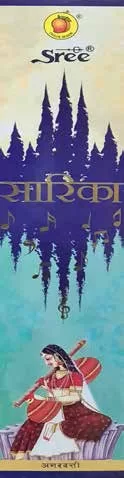
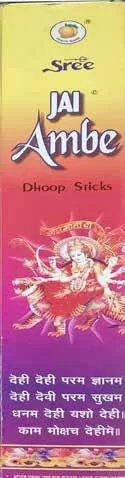
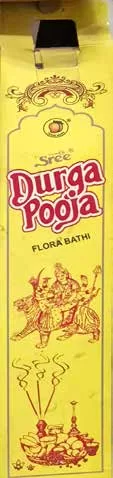
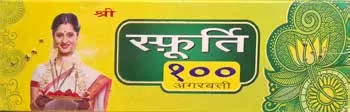
Apart from Khazana, they launchedSiddhi Ganesh and Jai Ambe dedicated to Vaishno Devi, — all of which are masala agarbattis. Other successful products include Real Kasturi,Chamor, DurgaPooja, Gopi 100, NityaPooja, JaiAmbe Sandal, MahaVishnu and Spoorthi 100.
Speaking on exports, Mr. Sanjay said that their Murali product is very popular in Sri Lanka, where they operate under a different trademark. They also export to South Africa, Mauritius, Malaysia, and Australia — each market receiving different products suited to local preferences. While 8-9 inch agarbattis are common in India, international markets demand 12, 16, and 19-inch variants. In Malaysia, the Kasturi brand is popular, which is a base agarbatti. The company began exporting in 1995.




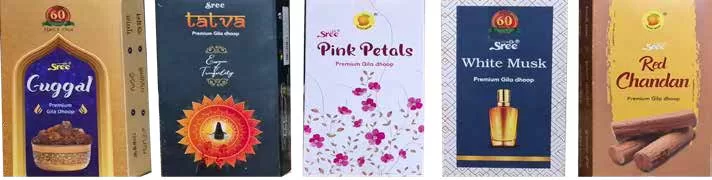
They also produce bamboo-less products and sambrani. Their dry sticks are 4 to 6 inches long, and they also produce premium wet dhoop. These are available in fragrances like sandal, rose, lavender, and oud, priced between ₹10 and ₹200 — a dozen packs cost ₹2410, each pack containing 10 sticks. Mr. Sanjay emphasized that these fall under value-for-money products and are highly appreciated.
Responding to a question on pricing in the masala agarbatti market, he said that some sellers lower prices by using cheap raw materials and sell dipped agarbattis coated with powder as masala sticks. Unaware customers often mistake them for flora agarbattis. In contrast, Sree Trading’s masala agarbattis are hand crafted using authentic spices and natural raw materials.
He admitted that while hand-rolled agarbattis have declined in popularity, the trend is making a return. Though 400g zipper packs are increasing in demand, they often lack fragrance. Hence, there’s a growing market for quality agarbattis, especially handmade masala ones.
He warned that some manufacturers are using substandard materials, which raises concerns about environmental and health hazards. However, he stressed that agarbattis made with the best raw materials can be beneficial to health and the environment. It is now the responsibility of manufacturers to offer ethical, quality products.
Mr. Sanjay told Sugandh India that 30 to 40% of the Indian market now prefers premium products. In cities, premium products are priced between ₹50 to ₹100, while the high-premium segment forms about 5% of the market. Bamboo-less and sambrani cup products are also trending. To tap into this, the company launched fragrant powder to be burned in cone molds — without using coal or bamboo powder. It’s very popular in South India and is now being introduced pan India as well.
On the trend of new fragrances, he mentioned a growing preference for spice and fruit notes. Various experiments are being conducted in bamboo-less products too. Just like masala hand-rolled agarbattis, they are also conducting research on bamboo-less masala sticks, which is now complete and expected to launch within a couple of months. Both machine-made and handmade processes will be used equally in production.
To a question from Sugandh India about challenges in the industry, he responded that consumer awareness is essential to promote quality products. He said this industry is sacred and clean, and there should be no use of child labor or harmful chemicals/acids.
Mr. Suhas, from the third generation, said that they are focusing more on masala and flora agarbattis, and aim to create new trends through the launch of powder agarbattis. The company is also working on other puja materials like roll-ons, camphor, and oils to expand its range. He shared plans to open a large showroom in Bengaluru for agarbattis, dhoop, and puja materials — which, if successful, will be replicated in other cities. He added that the agarbatti industry is growing at 10% annually, has a glorious history, and a promising future.
He shared a story about the origins of agarbatti: During a yagna in South India’s Kumbakonam, a king used sandalwood, herbs, and fragrant items. So impressed by the aroma, he ordered his minister to create something out of these natural materials so that even a come man could experience this divine aroma and feeling. At that time they mixed all the natural material and made it into a paste and rolled it on the bamboo stick, sparking the beginning of agarbatti in the region, which later spread across South India and then the entire country.
Even today, South India continues to use natural raw materials, while elsewhere, many have turned to chemicals for profit. Finally, he emphasized that demand for Indian agarbattis is also rising overseas, especially in Buddhist countries, where people often burn entire packets in temples. Japanese consumers prefer good fragranceagarbattis, which presents an opportunity for Indian manufacturers to focus on the global market.