
RISING DEMAND for Quality Among Consumers: Dheeraj Jain
Exclusive Agarbatti Showrooms Signal a Bright Future
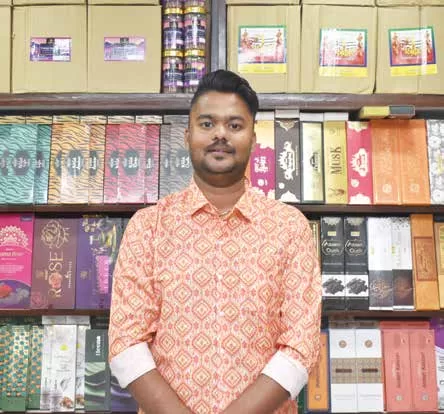
In a conversation with Sugandh India, Dheeraj Jain, head of Mahavir Agency, said that the marketfor premium-quality agarbatti (incense sticks) and dhoop products has grown rapidly since 2005.Before that, consumers preferred inexpensive products — agarbatti and dhoop were used merelyto light one or two sticks during prayer. But over the past 20 years, consumers have become moreaware, and rising incomes among a large section of society have led to increased demand for highqualityproducts with superior fragrances.
Consumers now understand thedifference between handmade andmachine-made agarbatti. Theyconsider aroma products and masalaagarbattis superior to ordinaryscented sticks. This awareness is amajor reason why the agarbatti anddhoop industry is growing rapidly and will likely continue to grow. Consequently,most branded companies are focusing more onmanufacturing high-quality products. He mentionedthat the importance of agarbatti trade has grown somuch that exclusive showrooms started openingaround 2015. His agency, originally a wholesaleoperation, now also has two retail outlets.
Speaking to Sugandh India, Mr. Jainexplained that Mahavir Agency operates twofirms:Mahavir Sugandhalay and MahavirSugandhi Market, both of which areengaged in trading. The agency wasestablished in 1978, and the firm wasregistered for trading in 1984. Theynow work with 78 branded companiesfrom Bengaluru, Mumbai, Gujarat,and other states. His grandfatherstarted the business, which initiallyfocused on loose products. Back then,they worked with two companies:Ganga Products Bengaluru and BigSafari Nagpur. Today, they distributefor 78 companies in Aurangabad, andsupply to five or six districts includingJalna, Beed, Parbhani, and Nanded.Their distribution network includes 10wholesalers and over 500 retailers, plustheir own two outlets.
Dheeraj Jain shared that their mainproducts include Ravi Raag, OrkayFragrance, Oriental, GP IndustriesShimoga, OK Camphor, Lohana, andJayant Mumbai. Other brands includeNeev International, Rathnam, Garima,Shri Dhan, Siddhi, Good Luck,Manohar, and Harsha Essence.When asked about their supplychain, he explained that theymainly supply to general stores andsupermarkets. Sellers of organicproducts also source handmadeagarbattis from them. Products pricedat ₹60–₹70 (MRP) in the economyand premium range are popular. Thebest-selling regular product is the₹50 zipper pack, followed by the ₹10pack. Since the ₹10 pack has fewersticks, most customers now prefer the₹50 monthly pack due to the larger quantity.
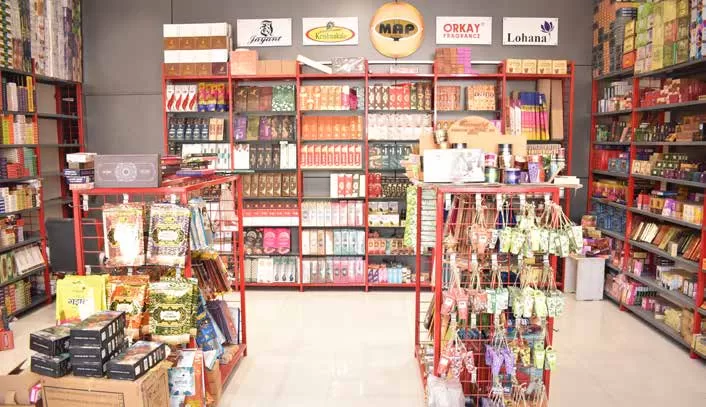
The top-selling brands in the areainclude Cycle, Zed Black, Lohana(Ahmedabad), Ravi Raag,Rocket, and Big Safari. ITCalso has its own share of the market.
He noted that in Aurangabad, incense sticksaccount for more than 70% of the market, withdhoop at 30%. But in their firm, the split is 60%incense and 40% dhoop. Around 90% of the dhoop inAurangabad is wet, while only 10% is dry stick, mainlydue to mosquito and fly issues. Quality in dhoop hasimproved, and now most premium wet dhoop emitswhite smoke, making it suitable for indoor use. Amongdhoops, Ravi Raag, Hari Darshan, and Zed Blackpriced between ₹20 and ₹30 are popular.
They mainly sell products in the ₹40, ₹60, and ₹120MRP range. Premium offerings from BIC and Balaji arein demand. In dry dhoop, jar packs priced at ₹50–₹80containing 30 sticks sell well. During festive seasons,premium products with 10–15 sticks in the ₹100 rangeare popular. In wet dhoop, Ravi Raag has premiumproducts priced above ₹100, and even packs worth₹300. In dry sticks, Zed Black, Lohana, and premiumproducts from Shridhan, Oriental, and Orkay are bestsellers.
Regarding Aurangabad’s market trends, heshared that in the ₹10 to ₹50 pack range, brands fromAhmedabad and Nagpur dominate. Bengaluru stillleads in the premium quality segment. Loose incensedoesn’t sell much here. On average, a customer spendsabout ₹500 per month on prayer-related products.However, premium customers buy between ₹5,000to ₹10,000 worth of goods. Premium incense buyerstypically purchase packs priced between ₹200 to ₹400.Around 8 or 9 out of 10 customers buy based on brandname, while a few prefer to try new fragrances eachtime. Young students also prefer different scents asmood fresheners. When they opened their outlet ina locality a year ago, ₹100 MRP packs barely sold now even ₹500 to ₹1000 packs sell easily. Customerswho used to ask for ₹50 or ₹100 packs have almostdisappeared.
He emphasized that consumers in Aurangabadare ready to buy premium products, but retailers anddistributors often fail to deliver them. If premiumproducts reach quality-conscious customers, they willcertainly buy. This clearly shows that the agarbattiindustry is growing steadily.
Mr. Jain also informed Sugandh India thatproducts from Ahmedabad-based companies suchas Dhanlaxmi, Siddhi Fragrance, Lohana, Vijay,and Nishan are in demand here. Sambrani sticksare less common. Pandian’s Lakshmi Sambrani ispopular. Chintan is positioned in the premium range.Sambrani cups have a good market, especially theones without charcoal. The ₹90 sambrani pack sellswell. Charcoal sambrani products sell for ₹30, whilenon-charcoal ones range from ₹40 to ₹80 and above.Among sambrani brands, Ravi Raag, GT Chennai,and Siva’s Lakshmi are popular, but Cycle’s Naivedyaholds the number one spotwith 50% market share anddominates 90% of the sambrani segment. Naivedya hasthe strongest market presence.
In camphor, Mangalam and OK dominate. Lotus,Saraswati, and 555 are also popular. Bheemsenicamphor has a 50% market share. In sandalwood,Manohar and Kashi are preferred for tilak. HariDarshan is also in demand.
In response to a question, he concluded that thebrands that sell best are those that ensure timelysupply.


