


The Future of the Industry Lies in Quality: SuhasGarima Fragrance A Well-Known Name for Premium Products
0 comments

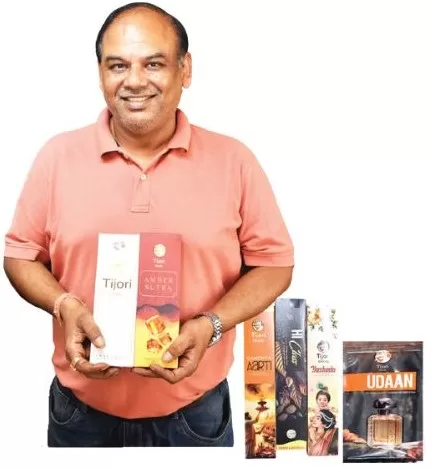
For over five decades—spanning two generations—Garima Fragrance and N G Subbaraya Setty & Sons, led by Mr. Suhas in Bengaluru, have been manufacturing incense and dhoop products. According to him, the incense and dhoop industry has now become global, and it is an industry that will never fade away. However, its future depends on natural products, since the market for synthetics cannot grow much further.
“The educatedand awareyounger generation prefersnatural, herbal, and aromaticquality products,” he toldSugandh India in an exclusiveinteraction. “The ‘rate race’ isincreasing, and manymanufacturers arecompromising on quality. Butif one shows patience andmaintains quality, consumerseventually recognize it. That iswhy demand for qualityproducts is rising day by day.The brighter the demand for natural products, thebrighter the future of the incense and dhoop industrywill be. Anyone can make synthetic products, buttrue quality lies in natural products. Only by standingfirm on quality can the industry have a promisingfuture.”
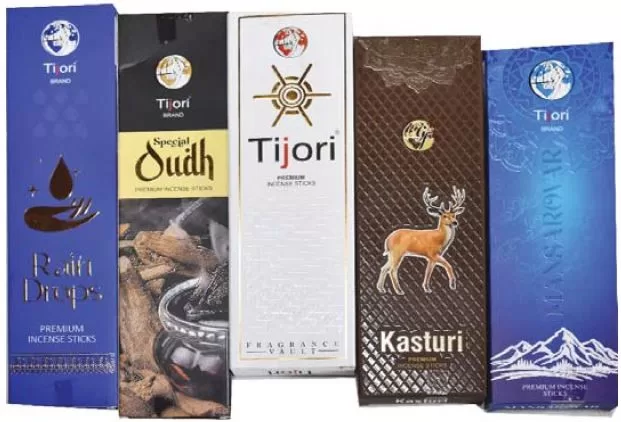
Mr. Suhas shared that the business was started by hisfather in 1973. “We operate through two firms—Garima Fragrance and Subbarayasetty& Sons. Ilearned the nuances of manufacturing directly frommy father. I have inherited two generations oftraditional knowledge in identifying herbs, spices,and their blending for production,” he said. Earlier,herbal mixtures were prepared and then buriedunderground, to be taken out after 15 days, acquiringa natural earthy fragrance. “Even today, I use this oldtechnique while manufacturing our premium brandssuch as Kasturi, Kesar Chandan, Tijori, Mansarovar,Amber Sutra, and Nipun,” he added.
Recalling earlier times, he said that in his father’s era,our brands like Eenadu and Taranga were popular.The business was entirely started from Bengaluru.Later, they launched a brand called Tsunami, withthe slogan “Peak Tides of incese.” Smiling, herecalled, “When the actual tsunami came, peopleimmediately remembered that brand.”
Currently, in the premium range, Tijori MasalaHalmadi Incense, Mansarovar, and Amber Sutra areamong the bestsellers. The company offers nearly200 product ranges. In addition, many companiesacross India purchase loose masala incense fromthem and sell it under their own brand names. “Weprovide each company with products of different fragrances and qualities so that no two brands smellthe same,” he explained. Apart from handmade, thecompany also produces via machines.
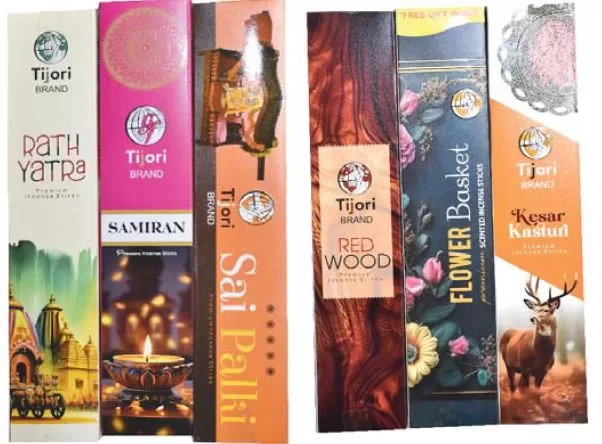
“All our products, irrespective of price points, fall inthe premium segment,” he said. Products range from₹175 to ₹6,000 per kilo, with packaging priced at ₹50,₹125,and ₹325. In the high-premium category, a10-stick pack sells for ₹175, while the Nipun incensepack with 20 sticks is priced at ₹325. The companyprimarily focuses on the medium and premiumrange. In the ₹75/- zipper packs, varieties like Udaan,High Class, Flower Basket, Golden Amber, Jasmine,rose and Sandal are available, with an MRP of ₹75 butsold at ₹50.
Apart from incense, the company has also launchedfour ranges of dry Dhoop Sticks, with 50g packspriced at ₹80. Another 50g Tijori pack is priced at anMRP of ₹225. The company’s Sambrani cups are alsovery popular. Recently, they launched roll onperfumes in Musk,Amber, Sandalwood, Oudh andRose, available in 6ml and 8ml bottles, pricedbetween ₹350–₹400.
Speaking of their uniqueness, Mr. Suhas said, “Ourspecialty lies in the traditional knowledge passeddown over two generations. We don’t make randomproducts. Our strength is the deep knowledge ofherbs and spices, and especially in the premiumrange, we build products using this expertise.
Kasturi, Kesar Chandan,Park Rose and MysoreChandan in the medium range are among our topsellers.”
In terms of supply, the company primarily coversTamil Nadu, Andhra Pradesh, Puducherry, Gujarat,Goa, Maharashtra, Madhya Pradesh, andChhattisgarh. It has also recently expanded into WestBengal, Odisha, Kerala, and Jharkhand. Loose masalaincense, however, is supplied to companies acrossIndia. On exports, he explained, “We don’t directlyexport but supply through distributors. Handmadeincense is essential for exports, especially inEuropean countries. In Asian countries like Malaysia,machine-made products are acceptable.”
Concluding, he said, “Challenges in the market arenecessary. There will always be a tug-of-war overprice and quality. But those who remain patient andnever compromise on quality ultimately succeed—because not only the customer, today everyonedemands quality.”
Venue : Mumbai
Date 12th and 13th April 2025


