



Social media has become a major marketplace for agarbatti brands today
Rahul Busam, Diya Aromas & Fragrances
Hyderabad based Diya Aromas and Fragrances, is a wellknown name in distribution as well as in manufacturing its own brands. Speaking to Sugandh India, Rahul Busam, head of Diya Aromas and Fragrances, said that today’s era is driven by social media, which has become a very powerful medium to take products to the market. Compared to advertisements in newspapers and on television, people now evaluate product quality, packaging, and price through various social media platforms. Customers also share their experiences and opinions about products there. However, the narrative related to burning bamboo in agarbatti also originated from social media, due to which bamboo-less products are now becoming rapidly popular. He said that even in Hyderabad, around 20% of agarbatti consumers have shifted to bamboo-less products, and this segment is growing fast.
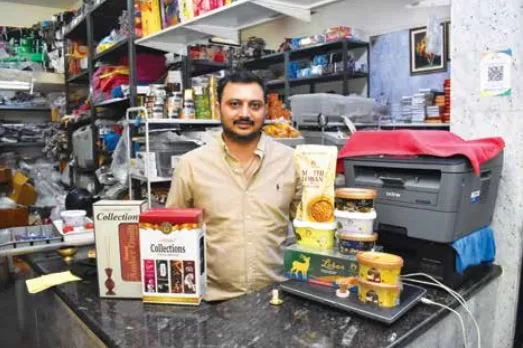
Diya Aromas handles the distribution of the Misbah and Forest brands. In addition, the company has launched its own brands—Moti Loban and Gow Chandanam. The company also manufactures a wide range of products under herbal notes, including sambrani cups made from cow dung and other herbal raw materials, multiple varieties of bakhoor, cones, sticks, metallic dhoop, and dakhun chips. During the interaction with Sugandh India, he said that his company produces best-quality bakhoor. Their older brand Moti Loban has beenupgraded with improved packaging. He emphasized that in the agarbatti industry, packaging is as important as quality, as customers now pay much more attention to packaging. He also mentioned that they have recently launched Gow Chandanam—such a sandalwood product has not been made by anyone in the country so far. It uses cow dung and ghee, but they have given cow dung a twist by adding other aromatic ingredients. Similarly, their sambrani cups contain pure ghee and guggal and are entirely based on herbal notes. He said that many cow-dung-based products have entered the market, but they have differentiated theirs by combining sandalwood, ghee, natural herbal raw materials, and cow dung. While most companies offer packs of 12, they are offering packs of 15. In bakhoor as well, they have many varieties such as Muattar, Dakhun, Rose Oudh, Al Bakhoor, Oudh XS, and many more varieties are in the pipeline. He added that there is good counter demand for cones, sticks, metallic dhoop, and dakhun chips.
Responding to a question from Sugandh India, Rahul Busam said that completely new trends are emerging in the market. Misbah and Forest have carried out many new experiments. Their products are of very high quality and apart from the domestic market, Misbah is placing strong emphasis on exports. He said that many new companies have entered the market, leading to intense competition in terms of price and quality. Small and new manufacturers oftenlaunch multiple product ranges at once and flood the market on credit, which later results in losses. If instead they launch only a few selected best products, they can sustain themselves in the market for some time. He mentioned that currently about 75% of the market operates on credit. While the market for pooja items, agarbatti, and dhoop is growing rapidly, there are negative aspects as well. Apart from credit issues, many rumors have been spread about burning bamboo in agarbatti. However, a market for bamboo-less products has now developed and is growing rapidly across the country. This is why most agarbatti companies are now also manufacturing bamboo-less products.
Rahul Busam said that apart from Forest and Misbah, the top-selling brands in the Hyderabad market include Cycle, Zed Black, ITC, Shri Trading, Parimal Mandir, Balaji, Real Fragrance, and BIC. He said that economy agarbatti sells more in the Hyderabad market, with the highest demand for 200-gram packs. Pouches have relatively lower demand here. In the economy segment, zipper packs of 90 grams, 120 grams, and 200 grams sell well. The market for wet dhoop is quite small here, but brands like Balaji, Zed Black, Misbah, Forest, Devdarshan, and Hari Darshan still have a presence. Answering a question, he said that products sell better when companies offer higher margins to distributors. Along with quality and packaging, margin is a major factor. He further told Sugandh India that in sambrani cups, Cycle’s Naivedya has a very strong market. In candy, guggal, and new varieties, Misbah is the most popular, and Topsi also sells well.
He said that in bakhoor, apart from their own brands and Ajmal, some Mumbai-based brands also perform well. He added that many companies have significantly reduced both prices and quality. Products do not face difficulty in the market when manufacturers pay special attention to quality, pricing, and packaging. Answering another question, he said that in attar, they sell only Ajmal products. Many companies are offering various types of attars and roll-ons, but most are chemical-based. Similarly, in chandan tika, they stock the Bhawani brand from Varanasi, and in pooja oil, Mangalmai from Mumbai is also quite popular.


