



50 Years in the Trade: Govind Ram Agarwal on the Changing Agarbatti Industry
The Future of the Agarbatti Trade Is Bright, Manufacturers Must Have Vision
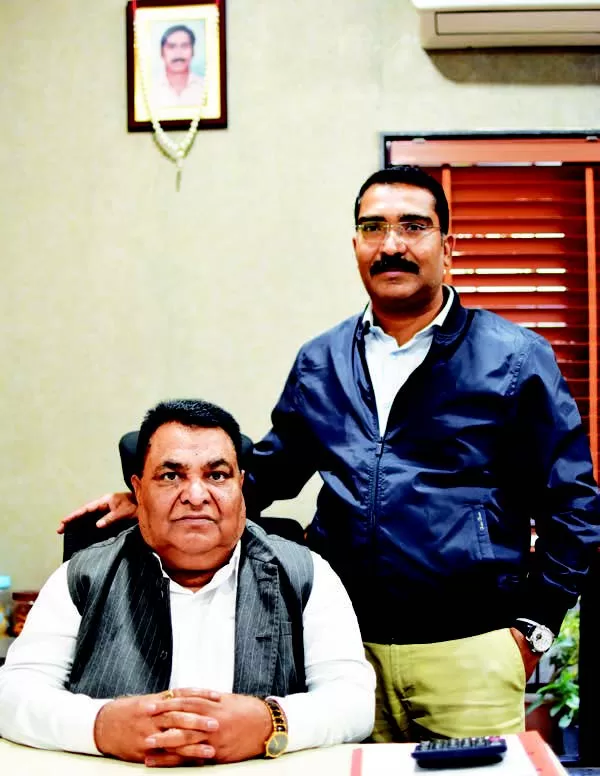
Mr. Govind Ram Agarwal, head of Associated India, is considered one of the biggest names in the marketing side of the agarbatti industry. He has been associated with agarbatti trading for the last 50 years. Associated India is a super stockist firm for brands such as Man Mandir, Forest Fragrances, Roshan Agarbatti Mysore, Raj Fragrances, Big Bell, and Dhoop Chhaon across Assam and the Seven Sisters states. Apart from this, Associated India also operates a trading business in Kanpur, Uttar Pradesh.
In an exclusive conversation with Sugandh India, Mr. Govind Ram Agarwal said that he has been associated with the agarbatti business since 1976. At that time, there were very few products in the market, demand was limited, and the consumer base was small. During that period, they were associated with Metro Agarbatti of Hyderabad. He said that in thosedays, both manufacturers and distributors used to run their businesses while sitting at theirtraditional trading counters, and gradually somepeople began introducing structured marketing
practices into the industry.
He stated that the future of the agarbatti industry is extremely bright today. Both demand and supply have increased significantly, which is why even a large multinational company like ITC has entered agarbatti production. However, replying to a question, he said that except for four or five companies, most manufacturers are working without any clear vision. According to him, this is the reason why even today only a handful of companies can truly call themselves genuine all-India brands. Most large companies remain limited to just one or two states.
Mr. Govind Ram Agarwal told Sugandh India that the agarbatti trading business was originally started by his maternal uncle, Mr. Parmanand Singhal, in 1972. Later, in 1976, he himself joined the business in Guwahati.
Today, his sons Praveen Agarwal, Sandeep Agarwal, and Satish Agarwal are also associated with the business. Sandeep manages the Kanpur operations.
He explained that at one point he handled the Jyoti Laboratory brand across 15 states for 19 years. His association with Metro Agarbatti, Hyderabad, also dates back to 1972. Replying to another question, he
said that throughout his 50 years of experience, he never preferred working with already established and large brands. Instead, he always chose to workwith brands that were either new or not yet established in a
particular market.
Speaking about the launch of Associated India’s Kanpur office, he said it was started nearly 20 years ago. According to him, Kanpur and Uttar Pradesh together represent a massive market, and the business achieved the success they had expected when they entered the region.
In response to a question, he said that cone products were not popular in Uttar Pradesh earlier. He claimed that they were among the first to introduce the category from Kanpur. Consumers were educated that wet dhoop is handmade, whereas cones are dry products and comparatively a better option. Gradually consumers understood the category, and today cone products have become highly popular alongside dhoop products in the region
Replying to a question from Sugandh India, Govind Ji said that the single highest-selling brand in the market is Man Mandir. Their firm has a strong network throughout the North East, with a supply chain operating through nearly 500 counters and around 100 distributors. According to him, agarbatti products naturally sell more in areas with larger populations.
He added that apart from Guwahati, sales are strong in several other regions as well. However, in states such as Mizoram and Meghalaya, agarbatti consumption is comparatively lower because of the larger Christian population. Similarly, Arunachal Pradesh has a smaller market due to its lower population. On the other hand, Tripura is considered a very large agarbatti market, and some suppliers from the state also export products to Bangladesh. He clarified that their own operations are limited only to the domestic market, while some traders from Imphal also export to Burma (Myanmar).
Replying to another question, he said that the dhoop market is still relatively small in the region, while ₹10 agarbatti packs remain the highest-selling products. However, the demand for ₹20 MRP packs is rising rapidly. According to him, one of the major reasons is that these packs contain a higher number of sticks. He explained that this is one of the reasons why the Man Mandir brand has established a stronger hold compared to brands like Zed Black and Shalimar, as it offers better quality, lower prices, and higher product weight.
He said that while box packaging continues to dominate the market, zipper packs are also witnessing strong growth. The demand for ₹50 packs and jumbo packs is increasing rapidly. The sambrani cup segment is also performing reasonably well, with Forest’s Bahubali emerging as a strong product in the category.
Replying to a question regarding fragrance preferences in Assam and the North East, he said that consumers do not particularly differentiate between strong and light fragrances. According to him, people simply prefer fragrances that smell genuinely good. Sharing his marketing experience, he said that although many companies today rely on large marketing teams and structured sales operations, he personally never followed that approach. Even today, he visits markets himself and personally monitors sales activities.
He further said that there is no shortage of business opportunities in the market, but many companies fail because they either compromise on product quality or charge excessively high prices. According to him, many people consider attractive packaging to be the key to success, but in reality, product quality and correct pricing are far more important. Only when both these factors are balanced can a product survive in the market for a long time.
He stated that as a trader, he conducts one of the largest businesses in the country within the Assam and Northeast regions, which have a population of nearly 40 million people. Speaking about industry challenges, he said that challenges are part of every business. However, the biggest challenge today is that most manufacturers lack a clear vision regarding both their products and consumers, and everyone is blindly following market competition without long-term strategy.
Mr. Govind Ram Agarwal further said that the Assam and Northeast markets are largely similar to markets in the rest of the country. The only difference is that dhoop products are growing faster in Hindi-speaking states, and zipper packs are more popular in some regions, whereas consumers in the North East still prefer agarbattis more than dhoop products. Other than that, consumer behavior remains largely the same everywhere. According to him, consumers everywhere want goodquality at affordable prices
He said that the future of the industry is extremely promising. The industry is growing continuously and undergoing rapid changes, which means businesses must adapt according to changing times. Speaking about future plans, he said that the next generation will now decide the future direction of the business. Companies generally supply products on 30-day credit terms, and timely recovery from the market is equally important. Business can survive only when this balance is maintained properly.
Replying to another question, he said that based on his 50 years of experience, he considers Ganga Agarbatti to be the number-one product in the market. According to him, Forest ranks second, while Roshan stands third. Offering suggestions to companies, he said that manufacturers should always maintain the right balance between quality and pricing. Before taking up any company’s products, he personally evaluates the fragrance and quality of the agarbatti. He also tries to estimate the potential market response for a particular fragrance. According to him, he never focuses on packaging; he only evaluates fragrance and pricing, and if both are right, the product is bound to succeed in the market.
During the conversation, Mr. Praveen said that Babooji has such deep experience in products and marketing that even companies seriously value and implement his suggestions. Giving an example, he said that Forest Agarbatti has been in the market for the past six years. Once, Govind Ji noticed a white incense stick in one of the company’s products and suggested that they launch a White Forest variant in the ₹10 price range. Due to its superior fragrance and higher stick count, the product became a nationwide hit. Later, the company also launched it in the ₹50 MRP range.
Replying to a final question, he said that Forest’s Black Agarbatti, White Agarbatti, and Pineapple variants are performing exceptionally well in the market. He described Ganga Products’ Man Mandir as a product of extremely high quality. Big Bell is also performing strongly, while Roshan’s Kasturi remains another highly popular product in the market.


