


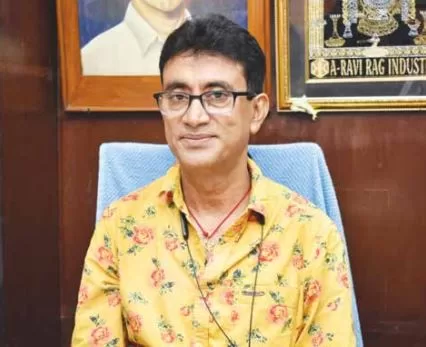
Kolkata now supplies only South Bengal, while the reins of North Bengal are in Siliguri’s hands:Anil Dutta
0 comments
There was a time when Kolkata was the center of the incense market in West Bengal. But now, the state is divided into North Bengal and South Bengal markets. Several cities like Siliguri and Cooch Behar have become new centers, with companies appointing agents and distributors everywhere. In a conversation with Sugandh India, Anil Dutta, head of Rajib Agarbatti Firm, said that earlier when Bengaluru companies dominated the market, all business operations were run from Kolkata. Kolkata supplied even Assam, Bihar, and Odisha. But now many new centers have emerged.
Rajib Agarbatti Firm was started in 2016. Anil Dutta shared that his father started manufacturing in 1984 under Sunil Perfumery Works. Their products were very popular, and TV advertisements were aired. The Taj Mahal brand was very famous. It was a joint family business, but after his father’s passing, the entire family depended on one business. So, in 2016, he started his own venture. He visited Bengaluru for trading and worked with several companies.
At that time, Shalimar and Bharat Darshan sold very well. He met the management of Padma Company, took samples, brought five cartons of sandal and other products, which became very popular.
He said they now handle KRISHNA KALA (A. Ravirag industries), which has a strong market presence in Bengal. They also handle Bengaluru’s Amin Bhai’s Fresh Fragrance, Gangotri, and West Bengal distribution of Aroma Burner’s Electroma camphor burner and Bhimseni camphor.
Their network covers all ofWest Bengal. Earlier they sent goods to Bihar and Odisha, but now that companies have local centers there, they have stopped. Exports to Bangladesh have also decreased.
He said that the bamboo-less dhoop market started only 1–2 years ago. Earlier no one even knew the name of these products. Now wet dhoop, dry sticks, and sambrani make up 10% of the market, while incense sticks still dominate with 90%.
Incense sticks earlier sold for ₹5, ₹10, and ₹15, but now ₹20 packs sell the most. ₹75 MRP packs do not sell much. People here lack money and employment opportunities. Before demonetization, people used to buy a lot, but after demonetization, purchasing power dropped, and expensive products sell less.
He said pouch packs sell well because they offer good margins for companies and distributors, and customers get more quantity.
He added that high-priced dhoop sticks have good demand, ranging from ₹10 to premium products. In camphor, branded products and Bhimseni camphor sell well; loose camphor does not. Attar and roll-on markets are gaining sales but are still small.
He said average monthly incense purchasing has declined. Before demonetization, customers spent around ₹200–₹300 per month, but now it is lower. Some premium customers still buy without looking at the price. Brand loyalty has reduced; only premium customers buy by brand name. Old brands with strong quality still retain customers.
Venue : Mumbai
Date 12th and 13th April 2025


