

Manufacturers Should Focus on a ‘Quality War’ Instead of a ‘Price War’: Trade Advice from Yogesh Suchak, S.K. Agencies
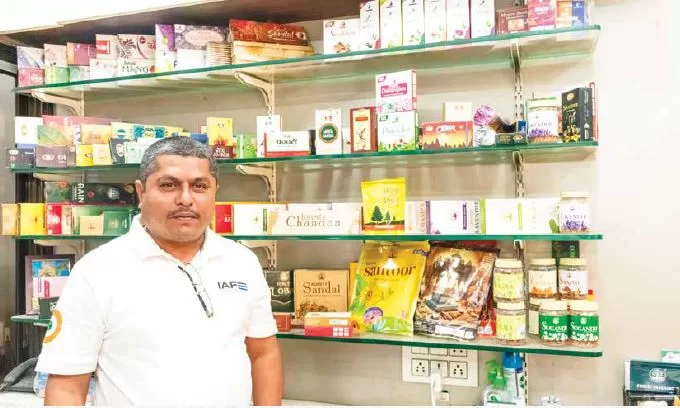
Mumbai based S.K. Agencies is a super stockist for several branded companies dealing in agarbatti, dhoop, attar, and camphor, with a supply network covering 21 districts of western Maharashtra through over 200 distributors. The agency’s office is located in Bhiwandi, Mumbai. In an exclusive conversation with Sugandh India, Mr. Yogesh Suchak (popularly known as Raju Bhai), head of S.K. Agencies, said that quality remains a major concern in the incense industry, and in the future, only quality products will survive. He explained that the industry is currently going through a price war, but this is only a temporary phase. Brands like Cycle and Forest have sustained themselves in the market for decades precisely because they deliver consistent quality. He emphasized, “The future of the industry is bright and will remain so, but manufacturers must now shift their focus from a price war to a quality war.”
According to him, today’s consumers seek the best possible quality, but some manufacturers are still focusing on low quality, low-rate products—an approach that won’t sustain in the long run.
Mr. Yogesh shared that his father started the incense business in 1980 under the name Shree Krishna Perfumers. Their first retail counter was opened in Kalyan, which is still operational today. Initially, they were manufacturing incense on a small scale, but Yogesh later decided to focus exclusively on trading instead of manufacturing. In 2019, he started S.K. Agencies as a super stockist, with Forest Fragrances as the first brand. Besides trading, they also run a retail business. Today, S.K. Agencies is also the super stockist for BIC, DhoopChhaon, 3 Pine Camphor, and Pandya Products (Chennai).
He further explained that S.K. Agency supplies to 21 districts of western Maharashtra including Thane, Raigad, Palghar, Ratnagiri, Sindhudurg, Nashik, Pune, Ahmednagar, Jalgaon, Dhule, Nandurbar, Aurangabad, Jalna, Latur, Osmanabad, Beed, Parbhani, Solapur, Kolhapur, Satara, and Sangli.
Speaking about Maharashtra’s incense market, Yogesh said it is strong but product preferences vary by region and district. Each zone— Marathwada, Western Maharashtra, Konkan, and Vidarbha—has distinct choices in brand, packaging, and fragrance.
- In the Konkan zone, bundle or muthhapacks and ₹10 pouches sell well.
- In Pune, Satara, Sangli, and Kolhapur,₹50 zipper packs are popular.
- Nashik has a mixed market, whileAurangabad and Jalna also show mixeddemand for zipper and other packaging.
- In Thane, Mumbai, and Palghar, economy,family, and premium products allperform well.
- Pune city mainly demands premiumproducts.
He added that south Indian products dominate the Maharashtra market, especially those from Bengaluru, followed by Ahmedabad, Pune, Nagpur, and Mumbai brands.
According to him, incense sales usually peakduring festive seasons, but in cities like Mumbai,Thane, Pune, Nashik, and Jalgaon, sales remainsteady throughout the year. Premium products sellconsistently in metropolitan areas.
Discussing the Mumbai market, he said thatCycle, Shalimar, Parimal Mandir, Forest, BIC,Balaji, Flourish, Nikhil, and Orkay are strongbrands. He noted a growing trend toward dry dhoopand bambooless incense, though currently, dhoop(in all forms—dry stick, wet cup, cone) only holdsabout 10–20% of the market, while 80–85% is stilldominated by agarbatti. Dhoop products have grownover the past 5–6 years but still trail behind incensesticks. Among bamboo-less products, Sambrani cupsand dhoop sticks sell the most, and in wet dhoop,only premium products are preferred. Popularbrands include Forest and Cycle for dhoop sticks,and Manthan, Hari Darshan, and Dev Darshan forwet dhoop.
He mentioned that there is limited innovationpossible in cup dhoop, but many new experimentsare happening in dhoop sticks—one reason whythe segment is growing. In cup dhoop, brands likeCycle, Forest, Zed Black, and Delta lead the market.
Talking about camphor, Yogesh said its demandremains high for about six months of the year—fromJune to November–December—during which about75% of annual sales occur, with the remaining 25%spread across the other six months. 3 Pine Camphoris currently the top-selling product, followed bylocal ones. There is much scope for mixing andinnovation in camphor. Branded products likeMangalam, OK, Rajkamal, and 555 have setbenchmarks for quality and fragrance, launchingmultiple camphor-based products and establishingcamphor as a branded category.
In Chandan Tika (sandal paste), ManoharSugandhi and Hari Darshan are the best-sellingbrands. Manohar offers a wide range of colors,while Shrifal also has a strong market presence withvariants in yellow, red, saffron, wet, and dry forms.
In roll-on attar and perfume oils, Arochem,Al Nuaim, and Nemat are the top-selling brands inThane and Mumbai. First Choice has also launchedseveral new ranges. The highest-selling segmentis 2 ml bottles priced at ₹30–35, dominated bybrands like Arochem and SFP. Next comes Nemat,which retails at ₹70–80 MRP, followed by premiumproducts like Balaji in the ₹100–120 range.
He also shared that customers at their retailstore spend an average of ₹300–500 per month onpooja and spiritual products, which rises to ₹800–2,000 during festive seasons. “Demand for qualityis growing rapidly,” he said, “and now about 50%of customers buy products purely based on brandname.”
Currently, Arihant supplies its perfumes to otherfragrance manufacturers as well, but the company’smain focus remains on innovation and creating afresh experience for customers.


