


THE ALCHEMY OF AROMA:AMBICA AGARBATTIES
From herbal Agarbattis to market leadership, our legacy is builton values and vision – Ambica Ramanjaneyulu Garu
The aroma of tradition, heritage, and innovation has long been associated with Ambica Agarbathies, oneof India’s pioneering incense manufacturers. Based in Eluru, Andhra Pradesh, the company traces its rootsback to 1946, when Mr. Ambica Ramanjaneyulu’s grandfather Sri Alapati Ramachandra Rao Garu foundedthe business with a vision to craft herbal Agarbattis that honored both spirituality and quality. Over thedecades, Ambica Agarbathies has evolved from a modest family-run enterprise into a brand synonymouswith craftsmanship, authenticity, and ingenuity in the Agarbatti industry.
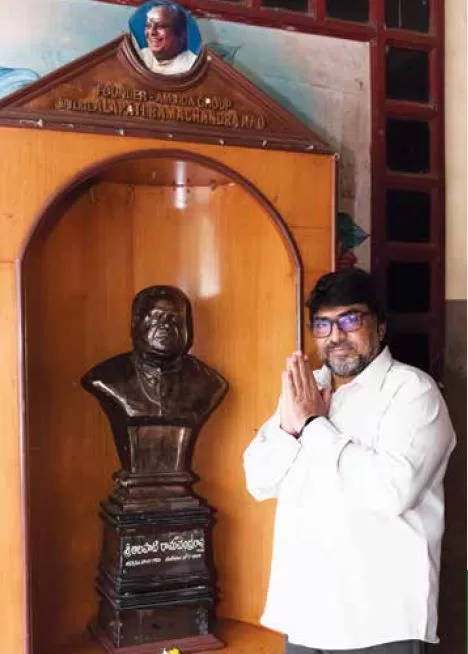
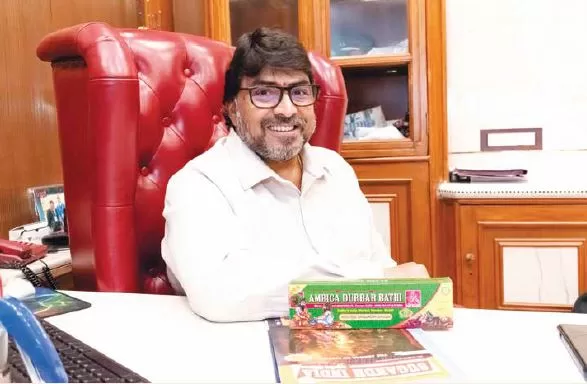
Today, the legacy continues under the stewardship of Mr. Ambica Ramanjaneyulu, Director of Ambica Agarbathies and the 39th President of the All India Agarbatti Manufacturers Association (AIAMA).
With a career spanning severaldecades, he has been instrumental inmodernizing production, expandingmarkets across India and abroad, and nurturing thenext generation of industry leaders. In this exclusiveinterview with Sugandh India Magazine, Mr. AmbicaRamanjaneyulu reflects on his family’s journey, theevolution of the Agarbatti industry, the importanceof traditional values, and his vision for the future ofincense manufacturing in India and beyond.
The Name Behind the Brand
On the question regarding the prefix “Ambica” ineveryone’s name in his family, Mr. Ramanjaneyulusaid that while his birth name is AlapatiRamanjaneyulu, the family chose “Ambica” as aprefix for everyone in the lineage, inspired by thecompany’s brand name. “If I say Ramanjaneyulu orAlapati Ramanjaneyulu, nobody will recognise,” heexplained. “Ambica is a brand name, and it becamea surname of sorts. Everyone in my family carriesit—Ambica Laxmana Rao (father), Ambica Krishna,Ambica Prasad, Ambica Raja (uncles), AmbicaSudarshan, Ambica Ramachandra Rao, Ambica SivaKumar, Ambica Hanuma (brothers).”
The Origins of Ambica Agarbathies
Sharing about the founding of his company, Mr.Ambica Ramanjaneyulu noted that his grandfatherstarted the business in 1946, even before India gainedindependence. “Agarbatti as an industry existedfor about 50 years at that time, but my grandfatherwanted to make herbal Agarbattis—an innovation inIndia,” he said. The idea was inspired by traditionalHomas (Hawan) and rituals, where Hawan Samagriwas offered as doopam to deities, symbolizingenergy and blessings.
His grandfather’s father was an Ayurvedic doctor,and the knowledge of herbs and their benefits waspassed down to him. “After his father passed away,my grandfather, with just 20 rupees, started thebusiness with my grandmother and her mother,”Mr. Ambica Ramanjaneyulu recounted.
Humble Beginnings and Values
Sharing with Sugandh India about the earliest days,Mr. Ambica Ramanjaneyulu said his grandfatherand grandmother personally rolled agarbattis byhand and sold them. “Because of those beginnings,my grandfather always respected labour. Hebelieved workers are not just staff, but family.” Thisempathy led to practices that distinguished Ambicaas an employer with heart.
Palmistry, Blessings, and Belief
Speaking about his grandfather’s spiritualphilosophy, Mr. Ambica Ramanjaneyulu recalled:“My grandfather used to say that when workers rollagarbattis by hand, their palmistry and blessingsenter the sticks. Their luck and fortune come intoour incense.” This belief, passed down throughgenerations, is still respected by the family andconsidered one of the reasons Ambica has sustainedits success for nearly 80 years.
The First Products and Innovations
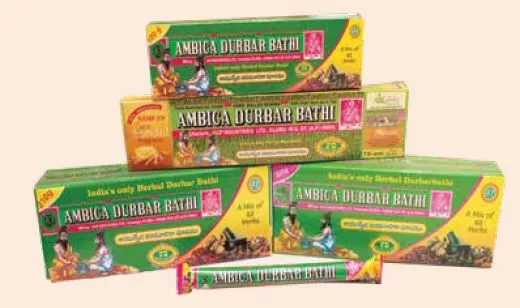
Discussing the company’s first products, he said,“The first brand in 1946 was Ambica Javaji Bathi,followed by the famous Ambica Durbar Bathiaround 1953–55.” He explained that AmbicaDurbar Bathi was made using natural resins and63 different herbals, making it distinct fromother Masala or Halmadi Batti varieties. It isalso distinctively coloured green, which makes itstand out from others. “Durbar Bathi is uniquebecause it combines natural resins, herbals,and perfume, all used in traditional Homas,”he added. Beyond Agarbattis, his grandfatherexperimented with other Ayurvedic productssuch as pain relief balm, tooth powders, andhair oils, eventually focusing on Agarbatti whenthe market responded positively.
Pioneering Innovation in the Industry
On innovation, Mr. Ambica Ramanjaneyulurevealed that Ambica was far ahead of its time.“When incense-making machines came toIndia around 2014–15, we had already importedone from Vietnam in 2008 and tested it,” heshared. Over time, Ambica simplified severalprocesses—many of which later becameindustry norms. “Still, for our special agarbattis,especially herbal ones, production is kept inhouseto maintain quality.”
A Strong Herbal Identity
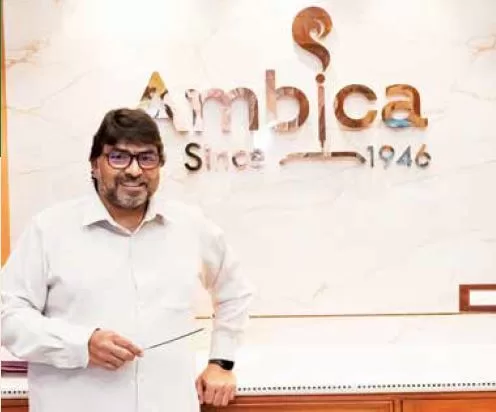
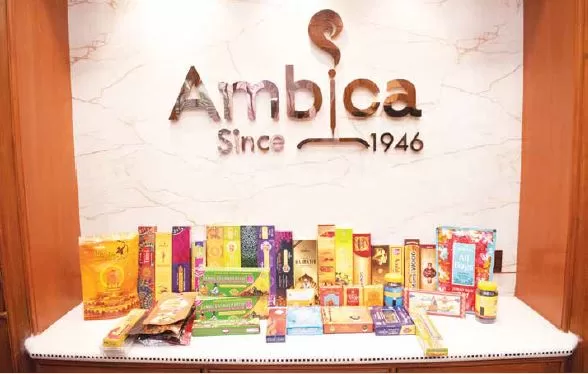
Emphasizing Ambica’s specialization, he said,“We have developed 20–25 herbal agarbattibrands—like Ambica Durbar Bathi, AmbicaBaba Harathi, Ambica Gowpuja, AmbicaBangaram, and Ambica Heaven. Herbal incenseis our strength and sets us apart.”
The Symbolism of Green
On being asked about Ambica’s signature greenbranding, he explained: “Green was chosen bymy grandfather as a symbol of herbal purity.Since we make herbal bathies, we had to reflectthat in our identity.” Over time, the green notonly became a brand color but also a familycolor, symbolizing purity, trust, and continuity.
Expansion Under the Second Generation
Mr. Ramanjaneyulu shared that his father SriAmbica Krishna entered the business around1967–68 and began marketing the productsacross Andhra Pradesh using a secondhandChevrolet van. “They would travel for10–15 days, selling Agarbattis, often sleepingnear temples in choultries (dharamshalas)because hotels were scarce,” he said. By 1969,distributorships were established, and thebusiness began expanding steadily withinAndhra Pradesh and Telangana.
Entering the Business and Scaling Production
Speaking about his own entry in 1986, Mr.Ambica Ramanjaneyulu said, “At that time,there was a huge gap between demand andproduction. Handmade Agarbattis could notmeet the market; we produced only 30–40percent of the market demand.” Together withhis brothers, he scaled production gradually,reaching full capacity only by 2010 due to thelabor-intensive nature of handmade Agarbattis.He also introduced new products such asscented Agarbattis, Doop Sambrani in 1992, andCup Sambrani in 1996, which became nationallypopular by 2007. Today, they have around200–300 products.
Diversification Beyond Agarbatti
Expanding beyond incense, Mr. AmbicaRamanjaneyulu highlighted his family’sventures into the hospitality sector with AmbicaEmpire in Chennai, a four-star 90-room hotel,and Ambica Sea Green in Vizag, a 40-roomproperty. The family also dabbled in filmproduction, creating seven to eight movies.
The Public Issue: A Pioneering Step
Discussing Ambica Agarbathies’ public issue,Mr. Ambica Ramanjaneyulu explained, “Myfather initiated it in 1996, making us thefirst Agarbatti company to be listed on stockexchanges. The funds helped expand in-housemanufacturing, raw material processing,and market competition.” He noted that the company’s shares peaked at ₹110–130 at onestage, highlighting the financial success of thisstep.
A Landmark Worker Welfare Policy
In response to a question on worker welfare,Mr. Ambica Ramanjaneyulu highlighted aunique policy: anyone who worked in thefactory for 15 years or more—be it sweeperor manager—was allotted 100 square yards ofland. “We have distributed about 20 acres sofar,” he said. When land distribution ended,the company converted the benefit into directfinancial aid. This initiative remains one of themost remarkable CSR practices in the industry.
CSR Rooted in Family Values
Explaining further, he said that Ambica’sCSR is not merely for namesake or externalrecognition. “Our workers are our family.Whatever we do is for them,” he emphasized.Every year, on January 25th, the birthanniversary of his grandfather, Ambicadistributes benefits, organizes medical camps,and even sponsors surgeries—including criticalcases like cancer. Festivals are celebratedcollectively with food and festivities, reinforcinga culture of belonging.
Leadership in AIAMA
On being elected as the 39th President of theAll India Agarbatti Manufacturers Association,Mr. Ambica Ramanjaneyulu reflected on thechallenges and responsibilities of representingthe industry. “It’s the first time someone fromoutside Karnataka has become president.AIAMA solved numerous industrial problems,from bamboo stick availability, Central Excise todecreasing VAT and GST rates.” He emphasizedhis focus on youth engagement and spreadingawareness of traditional values within theindustry.
Promoting Standards and the Role of BIS
Addressing recent developments with theBureau of Indian Standards (BIS), he explained,“For five years, AIAMA has been working to getAgarbattis into BIS and has finally done it. Thismakes sure that customers get the best qualityand are not cheated when they buy productsthat are BIS certified.” He added that BIScertification is crucial for the Agarbatti industry.
Future Vision and Legacy
When asked about his vision, Mr. AmbicaRamanjaneyulu said, “My priority is to educatethe new generation about traditional values,raw materials, and the 70–80 year legacy ofthis industry. We aim to maintain quality,expand markets, and continue innovating withproducts like Durbar batti, Doop, and ColorCup Sambrani.” He informed that AIAMA is alsoorganizing a large-scale expo on 6th, 7th, and8th November 2025 in Bengaluru to bring rawmaterial suppliers and manufacturers together.
Global Reach and Market Leadership
Finally, he highlighted the company’s exports toEuropean and Latin American markets, statingthat Ambica Agarbathies remains a marketleader in South India and has a presence all overIndia. The brand continues to expand acrossmajor cities in India, despite the productionchallenges of handmade incense. They havea separate product line for exports, going toEuropean and Latin American countries.
Conclusion
Reflecting on decades of dedication, Mr. AmbicaRamanjaneyulu emphasized that AmbicaAgarbathies stands on the pillars of tradition,innovation, and family legacy. “Our journey isabout more than business—it’s about preservingthe heritage of incense-making while inspiringfuture generations,”he concluded.