



FFDC: Shaping the Future of the Fragrance Industry
“Kannauj is not merely a place where attars are made; it is a confluence of
a fragrance culture that spans thousands of years and modern science.”
— Shakti Vinay Shukla
Whenever natural perfumes and attars are discussed, Kannauj is the first name that comes to mind. Preserving its unique attar-making tradition for nearly five and a half thousand years, the city continues to be recognised as one of the world’s most distinguished fragrance hubs. Alongside Grasse (France), Kannauj is counted among the rare cities where fragrance is not merely an industry but an integral part of its culture and heritage. For the past three decades, the Fragrance & Flavour Development Centre (FFDC), Kannauj, has played a pivotal role in blending this rich legacy with modern science and research. Established in 1991, the institute has today emerged as a leading centre for research, training, technical support, and quality development for the fragrance and flavour industry. In an exclusive interaction with Sugandh India, FFDC Principal Director Mr. Shakti Vinay Shukla shared his insights on Kannauj’s historic legacy, the vision behind the institute’s establishment, the challenges facing the industry, and the future of India’s fragrance sector.
Kannauj’s Identity: A Confluence of Tradition, Heritage and Science
Speaking about Kannauj’s unique identity, Mr. Shukla said, “Kannauj’s greatest strength lies in its traditional attar-making process. Distillation is practised in many parts of the world, but the way distillation and blending take place simultaneously through Kannauj’s traditional deg-bhapka system cannot be found anywhere else. That is our greatest identity.”
According to Mr. Shukla, Kannauj is renowned not merely because attars are produced here, but because the very process of making them is a living heritage. In the traditional deg-bhapka technique, the fragrance of natural flowers is carefully absorbed into sandalwood oil through a meticulous distillation process. This is why products such as Mitti Attar, Hina, Shamama, Choya Nakh, and several other traditional attars are appreciated worldwide for their natural depth, richness, and remarkable longevity.
Explaining the uniqueness of this traditional method, Mr. Shukla offered an interesting analogy. He remarked that just as food cooked in a traditional clay pot possesses a distinct taste that modern cooking equipment cannot replicate, the natural aroma and depth achieved through the deg-bhapka system cannot be fully recreated by modern production techniques. In his view, the future does not lie in abandoning tradition, but in strengthening it further through the application of modern science.
Kannauj’s Economy and the Role of ODOP
Speaking about the present state of Kannauj’s fragrance industry, Mr. Shukla said that it is this very uniqueness that distinguishes Kannauj from other fragrance centres around the world. Even today, nearly 30,000 to 35,000 people are directly or indirectly associated with the industry. The livelihoods of thousands depend on flower cultivation, aromatic plant production, essential oil extraction, packaging, trade, transportation, and several allied businesses.
He pointed out that this was one of the key reasons why the Government of Uttar Pradesh included Attar under its One District One Product (ODOP) initiative and later extended the scheme to the incense stick industry as well. According to him, the initiative is not merely a government programme but an important step towards giving Kannauj’s traditional fragrance heritage a stronger identity and wider market access.

FFDC’s Establishment: Bridging Research and Industry
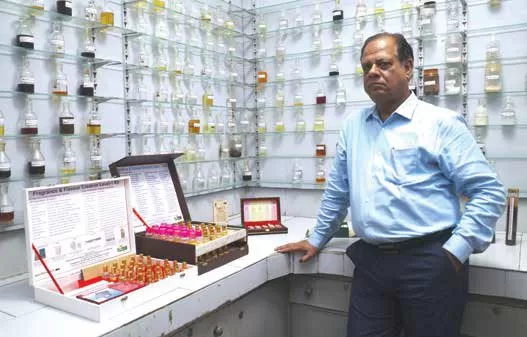
Speaking about the vision behind the establishment of FFDC, Mr. Shukla explained that the institute was conceived not merely as a research centre, but as a bridge between scientific research and industry.
“We realised that the technologies being developed in universities and research laboratories were not reaching the industry in time. FFDC was established to bridge this gap and create a strong link between research and industry.”
To realise this vision, the Government of Uttar Pradesh, the Government of India, and the United Nations Industrial Development Organization (UNIDO) came together. The state government provided land and infrastructure, the central government extended administrative and financial support, while UNIDO contributed technical expertise. According to Mr. Shukla, this tripartite collaboration has enabled FFDC to evolve into one of India’s foremost institutions for research, technical support, training, and quality development for the fragrance and flavour industry.
From Farmers to Industry: FFDC’s Scientific Role
Speaking about the scientific development of farmers and aromatic crops, Mr. Shukla explained that FFDC’s work is not confined to laboratories; its real journey begins in the fields. The institute strives to guide farmers in selecting the most suitable aromatic crops and varieties for achieving better yields and producing high quality essential oils.
Citing an example, he pointed out that although there are more than 2,000 varieties of roses, only a select few are suitable for producing premium-quality rose oil or attar. Likewise, FFDC provides technical support at every stage—from the scientific cultivation of lemongrass, vetiver, citronella, sandalwood, patchouli, and other aromatic plants to plant selection, essential oil extraction, and quality testing.
He emphasised that if farmers are provided with the right planting material, scientific cultivation techniques, and accurate market information, India can play a far more influential role in the global fragrance industry. According to him, this vision forms the foundation of every FFDC project, training programme, and technical initiative.
FFDC’s Role in Standardization and Global Quality Standards
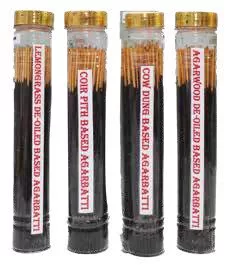
Speaking about FFDC’s role in standardization, Mr. Shakti Vinay Shukla said that the institute is not limited to research and training alone but also makes significant contributions to the development of quality standards in the country. FFDC has played a noteworthy role in formulating Indian standards for the incense industry.
He explained that, based on research carried out in collaboration with the Khadi and Village Industries Commission (KVIC), several technical standards for incense stick manufacturing have been developed, which today serve as guiding benchmarks for the industry.
FFDC has also presented several important scientific studies relating to International Fragrance Association (IFRA) standards. These studies established that certain international restrictions require re-evaluation in the context of Indian conditions. He noted that this scientific work has played a significant role in safeguarding the interests of the Indian fragrance industry. FFDC has also made valuable technical contributions to the development of Indian standards for agarwood (oud). Research in this area has been carried out in collaboration with various state governments and the Bureau of Indian Standards (BIS).
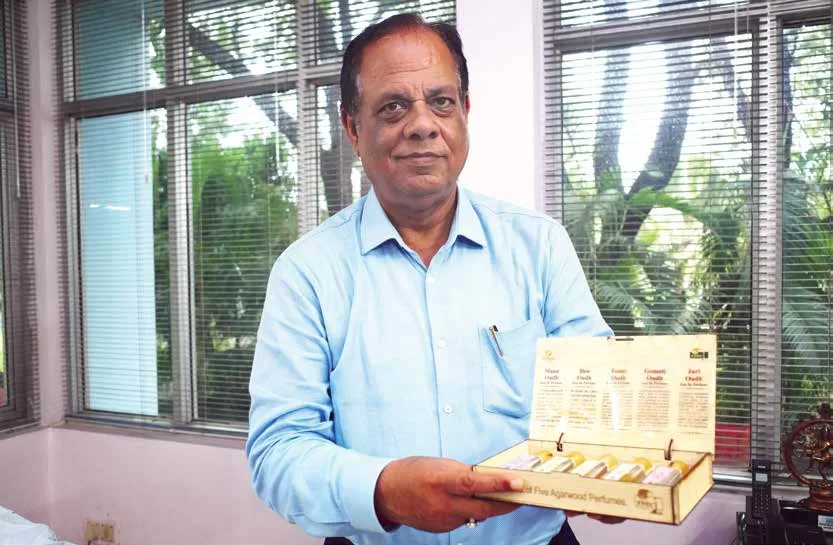
FFDC has also developed natural oud-based perfumes for the Government of Tripura, which were formally launched by the Chief Minister of Tripura. According to Mr. Shukla, the project stands as an important example of the institute’s scientific capabilities and its contribution to the development of natural fragrance products.
From Training to Employment: Preparing the Next Generation for the Industry
Speaking about training and skill development, Mr. Shukla said that FFDC has today emerged as India’s leading training centre for the fragrance and flavour industry. The institute provides training not only to the attar industry but also to entrepreneurs associated with the incense stick industry, perfumes, cosmetics, pan masala, flavours, the food industry, and the essential oils sector.
FFDC conducts training programmes at various levels, including one-week Fragrance & Flavour training programmes, Level 1, Level 2, and Level 3 professional courses, a one-year diploma programme, specialised postgraduate courses, and shortterm technical training programmes for farmers and entrepreneurs. Recently, in collaboration with Chhatrapati Shahu Ji Maharaj University, Kanpur, the institute also launched an M.Sc. in Fragrance & Flavour, through which students receive practical industry exposure via internships. Students are also placed for training with leading perfume, flavour, and cosmetics companies, enabling them to gain a better understanding of the industry’s practical requirements.
Many students trained at FFDC are today working not only across India but also with leading perfume and flavour companies in Dubai, Europe, and other countries. Several alumni have established their own brands, while many others hold key positions in global companies. According to Mr. Shukla, this clearly demonstrates that the fragrance and flavour industry is no longer just a traditional business but has emerged as a promising career option for the younger generation.


