



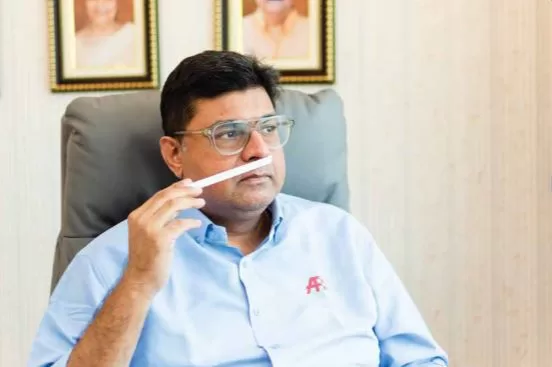
From Kolkata to the World: The Affarom Fragrance Journey
“As Vice President of FAFAI, my priority isbuilding strongindustry standards.”- Ashish Jhunjhunwalla
AFF Aromatics Private Limited, Kolkata—known globally as AFFAROM—is a major name in the worldwide fragrance industry. Over the past decades, the company has played a significant role in building a new identity and credibility for the Indian fragrance industry, especially in the Middle Eastern countries. The company supplies and exports nearly 1,000 varieties of fragrances to industries across the world that manufacture and use attars, perfumes, fragrances, and flavors.
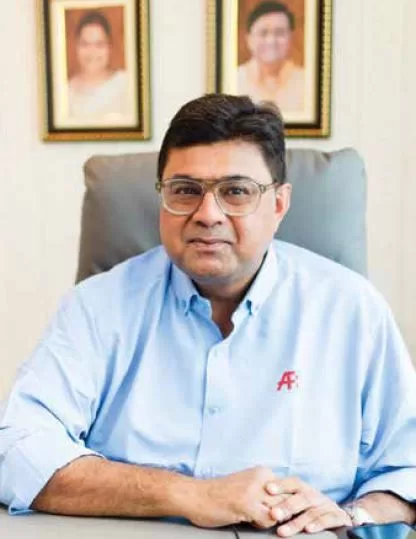
In an exclusive interaction with Sugandh India, AFFAROM’s director and perfumer, Mr. Ashish Jhunjhunwalla, shared that he represents the third generation of his family working in the fragrance industry. Mr. Jhunjhunwala is also the current Vice President of FAFAI (Fragrance and Flavors Association of ofIndia) and Vice President (East Zone) of EOAI (Essential Oil Association of India). His family has been in this business since 1935, when his grandfather started it. At that time, very few people imported perfumery ingredients. Kolkata was then one of India’s major centers for industry and trade. His grandfather, late. Sitaram Jhunjhunwalla began importing ingredients and compounds under the firm, which operated as a trading company. Later, his father, Late. GovindPrasad Jhunjhunwalla took over Paul & Son, a very well-known Kolkata-based company at the time.
From Trading to Manufacturing: A Family Transformation
Speaking about his family’s role in the fragrance industry, Mr. Ashish said that his father took charge of the family business at an early age of 16 in 1957. Gradually, his father began downsizing the import business due to licensing issues that arose in the 1960s. The company then focused on trading across India, primarily buying and selling ingredients and compounds.
Later, his elder brother, Late. AnandJhunjhunwalla joined the business. Before that, Anand Jhunjhunwalla had completed a perfumery course from the Perfumery Education Centre in London in 1984, after which he began working on creation compounding. In 1994, the family established a new company and set up their first perfumery compound manufacturing unit in Noida. By 1999, the family had completely exited trading and shifted fully to manufacturing.
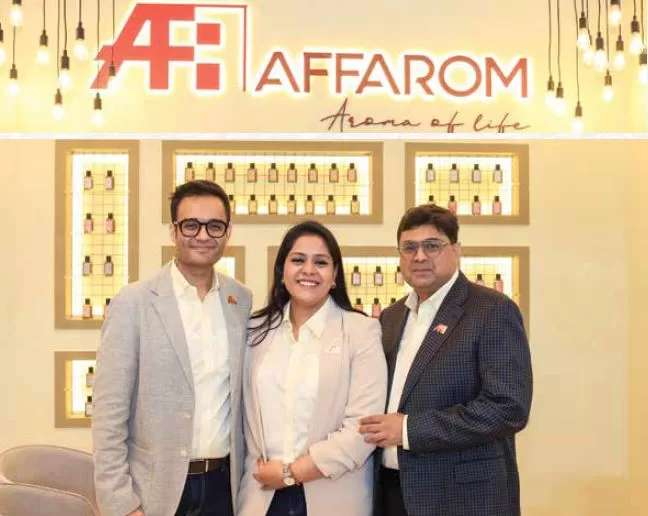
Mr. Ashish added that although he is technically the third generation, his elder brother was 15 years older and played a father-like role for him, which makes him feel like part of the fourth generation. Today, his brother’s son Aditya Vikram Jhunjhunwalla is also a skilled perfumer, and Aditya’s wife Vidhi Jhunjhunwalla is a perfumer as well. Thus, the family now has three in-house perfumers, with Aditya and Vidhi working largely in line with international market requirements.
International Education and Corporate Experience
Before joining the family business, Ashish Jhunjhunwalla completed a four-year degree course in perfumery from the University of Plymouth, UK. After that, he worked for six years as a Fragrance Developer at International Flavors & Fragrances (IFF), one of the world’s largest perfumery companies, which even today ranks among the top three globally.
In 2005, he returned to India and joined the family company. Speaking to Sugandh India, he said that he focused strongly on fine fragrances, which proved highly successful. As a result, exports began growing rapidly from 2009–10 onwards.
Changing Perceptions in the Middle East Market
Today, the company is 100% focused on fine fragrances, including spray perfumes, attars, bakhoor, and related products, all of which are in demand worldwide. Responding to a question about his personal contribution, Mr. Ashish said that his biggest achievement has been changing the perception of Indian companies in the Middle East.
There was a time when Middle Eastern buyers believed Indian companies could supply only Indian or Oriental attars. He successfully changed this mindset. Today, 80% of the company’s exports to the Middle East are French and Western fine fragrances, while the remaining 20% consists of bakhoor and other Oriental products.
Earlier, Indian companies also suffered from credibility issues, as buyers believed samples and bulk supplies often differed. Over 5–7 years, this perception was transformed.
When he began exporting, only 2–4 Indian companies were active in the region; today, 10–12 Indian companies are exporting there. He noted that Indian companies now compete strongly with French, Turkish, Spanish, and other international firms, and Affarom itself stands shoulder to shoulder with large multinational companies.
Product Range, Innovation, and Market Focus
Answering a question about Affarom’s mostpopular products, Mr. Ashish said the companyoffers all types of fine fragrances, which are in highdemand in the Middle East. Bakhoor and otherOriental products are also popular. Currently,the company has around 4,000 fragrances in itsportfolio and launches 25–30 new fragrances everymonth.
He emphasized that very few companies in India or abroad have the capability to launch so many new fragrances monthly. The company’s fragrance library contains nearly 4,000 products. Affaromalso develops customized fragrances for spray and perfume brands, with all production done in-house. Additionally, the company supplies raw materials to many large companies and well-known brands.
The company focuses on both domestic and international markets, though profitability is higher in the Middle East due to greater demand for high-quality products and better pricing. While the Indian perfume market largely ranges between ₹1,500 and ₹2,000, products in Dubai sell between ₹4,000 and ₹20,000.
Balancing Quality, Cost, and InspiredFragrances
He spoke about the trend of “inspired perfumes.” While the term is often misused, perfumery is such an art that no fragrance can ever be replicated 100%. Inspiration is natural, but the company always adds its own creative twist and perfumery skill. He clearly differentiated between inspiration, duplication, and branding. Affarom does not supply outright duplicate makers and does not give special importance even to inspiration-based brands. While he does take inspiration from branded products, he always modifies them into something uniquely his own.
Cost Structures and Entry into New Flavour Segments
Addressing another question, Mr. Ashish said that a lot of innovation is happening in the fragrance world. Even some of the world’s top Middle Eastern perfume companies use inspiration creatively.
He explained that cheaper products are madeby reducing ingredient quality—for example,using RCO’s. High-quality ingredients may rangebetween ₹5000/- to ₹200000/- per kg. makingit impossible to use premium raw materialsin a ₹2,000 product. Therefore, the companymanufactures both economy and premium-qualityproducts.
He also shared that the company has recently entered the tea flavor segment and plans to expand into other flavor categories soon.
Building Indian Standards for Fragrances and Safety
Responding to questions on product standards in domestic and international markets, Mr. Ashish said he has been serving as Vice President of FAFAI for the past six months. The association represents 800 small and large manufacturers, with turnovers ranging from ₹50 lakh to ₹2,000 crore.
Health and safety standards vary globally—somesubstances harmful in one region may not affectconsumers in India the same way.
FAFAI is working with the Indian Institute of Toxicology Research (IITR), Council of Scientific and Industrial Research (CSIR), Bureau of Indian Standards (BIS), and FFDC Kannauj to develop Indian standards. Since he took charge, three meetings have already been held, multiple subcommittees formed, and work is underway to introduce BIS standards for R&D and toxicology related to fragrances. The aim is to create Indian regulatory standards in collaboration with the government within two years. While FAFAI also engages with the government on GST and other issues, standardization remains the top priority.
A Dedicated Testing Lab for Small Manufacturers
Mr. Ashish further shared that FAFAI has established a high-standard laboratory in Mumbai for small manufacturers who do not have their own labs. This initiative has greatly benefited the industry. The lab is being further modernized, and awareness is being created among FAFAI members.
Members can bring their samples for testing by paying a fixed, predefined fee. Strict confidentiality is maintained—samples are coded, handled by a 5–6 member team, and no one can identify the source of the sample.
Emerging and Ongoing Fragrance Trends
Talking about current and upcoming trends, Mr. Ashish said that new developments are constantly emerging in fragrances and flavors. Gourmand fragrances—those inspired by food—are currently very popular. Vanilla is at the top, with multiple sub-notes. Fruity fragrances are also trending, with pineapple having seen a major surge earlier.
Dessert-inspired notes such as tiramisu, banoffeepie, and cake accords are in demand. Bananafragrance entered the market a few months ago,while pistachio, caramel, plum, and pumpkinnotes are also gaining popularity. These trendskeep evolving. In classic categories, only a fewprofiles dominate. Floral fragrances have alwaysbeen popular among women, while fougèreremains a timeless trend for men, made usinglavender, geranium, and tonka. Musk, amber,oriental notes, and oud have always been popularand will continue to be so, with each companyadding its own variations.
Future Plans and R&D Focus
Speaking about future plans, Mr. Ashish said that the company has been active in tea flavors for the past year and is working on several additional flavor categories. Alongside this, the company is also conducting R&D to develop innovative new ingredients for the fragrance industry in the near future.


