


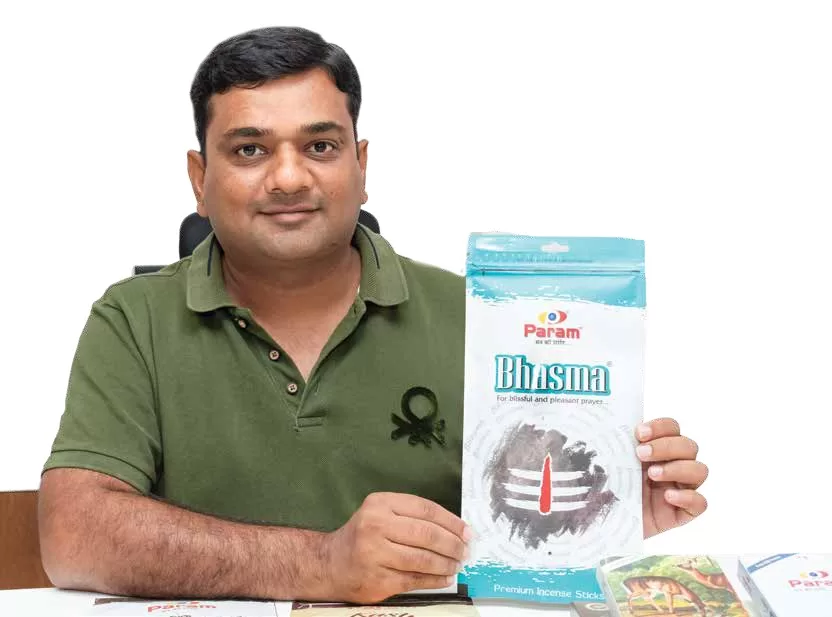
Param Brand to Launch 40 New Products During Festive Season: Keyur Patel
0 comments
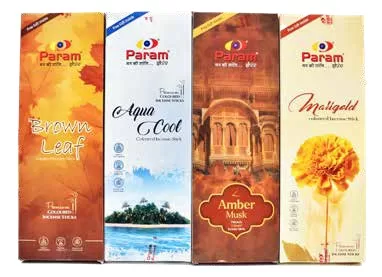
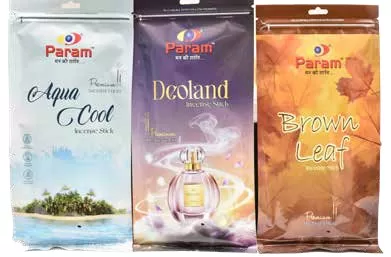
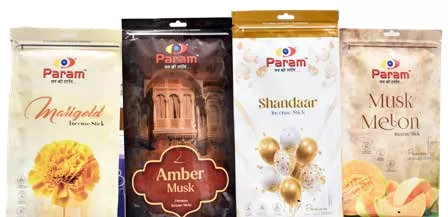

Param Agarbatti Works, Rajkot, is planning to launch 35 to 40 new products in premium, medium and economy ranges during the festive season, covering segments such as dry sticks, incense sticks, wet dhoop, sambrani cups and cones. In a conversation with Sugandh India, Mr. Keyur Patel, head of Param Agarbatti Works, said that he has been in this business since 2008, but after the Covid pandemic, we launched our own brand under the name Param. Before this, we used to supply raw incense sticks to the incense industry. On the challenges of moving from manufacturing raw incense sticks to starting his own brand, he said that challenges did come, but the real joy lies in moving forward through challenges. Earlier, incense sticks used to come from China and Vietnam. Even then, local manufacturers faced difficulties because raw materials still had to be imported from outside. When Vietnam sticks became very cheap, the problem increased further, but the government-imposed restrictions on agarbatti imports. By that time, we had already launched 3-4 products under our brand. The ban on imports of raw incense sticks from China and Vietnam benefited local raw-agarbatti manufacturers here, but I chose not to look back again.
In response to a question from Sugandh India, Mr. Keyur said that over the past few years, we continued moving forward with our brand. Since the Covid pandemic, Param Agarbatti Works has launched more than 350 product ranges, and the company manufactures across all segments, with products ranging from economy to premium. In response to another question, he said that at present, in the markets of most states
across the country, bamboo-less products such as dry sticks, wet dhoop, cones and sambrani cups are growing rapidly, while compared to these, agarbatti is gradually declining. He said that Gujarat, Maharashtra and Chhattisgarh still have a higher demand for agarbatti, but demand for bamboo-less products is increasing in other states. News coming from different sources in the market, as well as feedback from salesmen and distributors, is also indicating that demand for dhoop products is increasing.
In response to a question from Sugandh India, he said that the main markets for Param Agarbatti are across Gujarat as well as Maharashtra, Madhya Pradesh, Odisha, Chhattisgarh, West Bengal, Jharkhand, Assam and the North East. Besides this, we also have a supply network in South India, Uttar Pradesh and Punjab. He said that Param Agarbatti is now being introduced in Rajasthan. He said that the agarbatti market is good, but it is equally tough. No product can easily establish itself in a new market. Giving information about the company’s premium products, he said that we also manufacture handmade premium products. We have a pack of 10 incense sticks priced at Rs 190. In the premium range, 10 to 12 new product ranges are going to be launched soon. Besides this, several ranges with Arabic notes will also be introduced, and these too will be handmade products. In response to a question about new trends emerging in the market, he said that we have launched a spray collection series. These are available in zipper as well as box packs. In the spray collection, people prefer dark notes more.
Mr Keyur said that our premium-range products sell the most in Maharashtra, West Bengal, Assam and Madhya Pradesh. When asked whether the premium market is smaller in West Bengal, he said that the premium market is slightly more or less developed everywhere. Explaining why premium products sell in every state, he said that although premium sales may be lower, if your portfolio contains products from every range, it creates a good impression among consumers. When they see it in the shop that the company offers products from economy to premium range, they may purchase a medium-range product, and if they like it, eventually they will buy a premium product too, and in this way, customer’s trust gradually develops as the company makes good products. On a question regarding sharing his experience of moving from raw agarbatti production to establishing his own brand with new entrepreneurs, he said that the first challenge for new manufacturers is with themselves: they must make quality products. After that, the second challenge is packaging and marketing. Even after achieving success in these areas, the biggest challenge is how to sustain the brand in the market for a long time.
In response to a question about the impact of the US-Iran war on the agarbatti trade, he said that it has had a very major impact. The biggest impact is being felt by small local manufacturers producing loose incense sticks, because raw material prices have increased due to the war. They are unable to cope with this. He said that large companies have also faced increasing difficulties because of raw material prices, but for now they are somehow adjusting, because they also have old stock, but in the future companies will have to increase their prices. However, no company is currently willing to raise prices, but the situation is such that everyone will have to increase prices together. In response to a question, he said that like previous years, this year too we are going to introduce several schemes in the market. There is a Jagannath Puri tour scheme for West Bengal and Jharkhand. Last year, the company took distributors to Goa. This year too, we are going to introduce several schemes before the festive season.
Venue : Mumbai
Date 12th and 13th April 2025


